Sash windows · London
Timber sash windows for London's period homes.
Box sash, made to match your originals — genuine linseed oil putty and true through glazing bars.
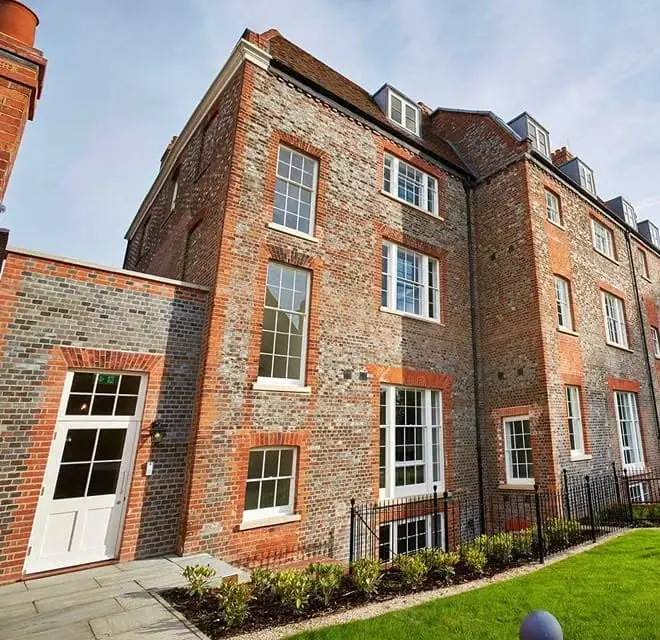
How we build them
Box sash, made to match your originals
We take the profiles off your existing sashes — the horns, the meeting rail, the width of the glazing bars — and build new box sash windows to the same section. Nothing comes off a shelf.
Each sash runs on cords, weights and pulleys, the way box sash windows have always worked. Spiral balances are quicker to fit, but they change how the window sits in the frame and how it moves. On a period property, that difference shows.
Draught-proofing goes into the frame, not across the face of it — brush seals set into the rebate, out of sight once the window is closed.
- Cords, weights & pulleys
- Matched horns
- Draught-proofed
How we build them
Spring balances, when you'd rather have them
By default we build sashes the way the section above describes — on cords, weights and pulleys. If you would rather, we make the same box sash to run on spiral spring balances instead.
A spring balance is a tube set into each side of the frame, with a spiral rod inside that carries the weight of the sash — in place of the weights in the box, with no cord and no pulley. It is the same difference noted alongside: the window sits in the frame differently and runs differently. Not better, not worse — different.
People usually choose them for narrower frames where there is no room for a weight box, or where simpler adjustment later matters more to them than staying faithful to the original. On a period property under conservation control, cords and weights usually look more appropriate — and we'll tell you which suits your window.
- Spiral balances
- Fitted on request
- We'll advise
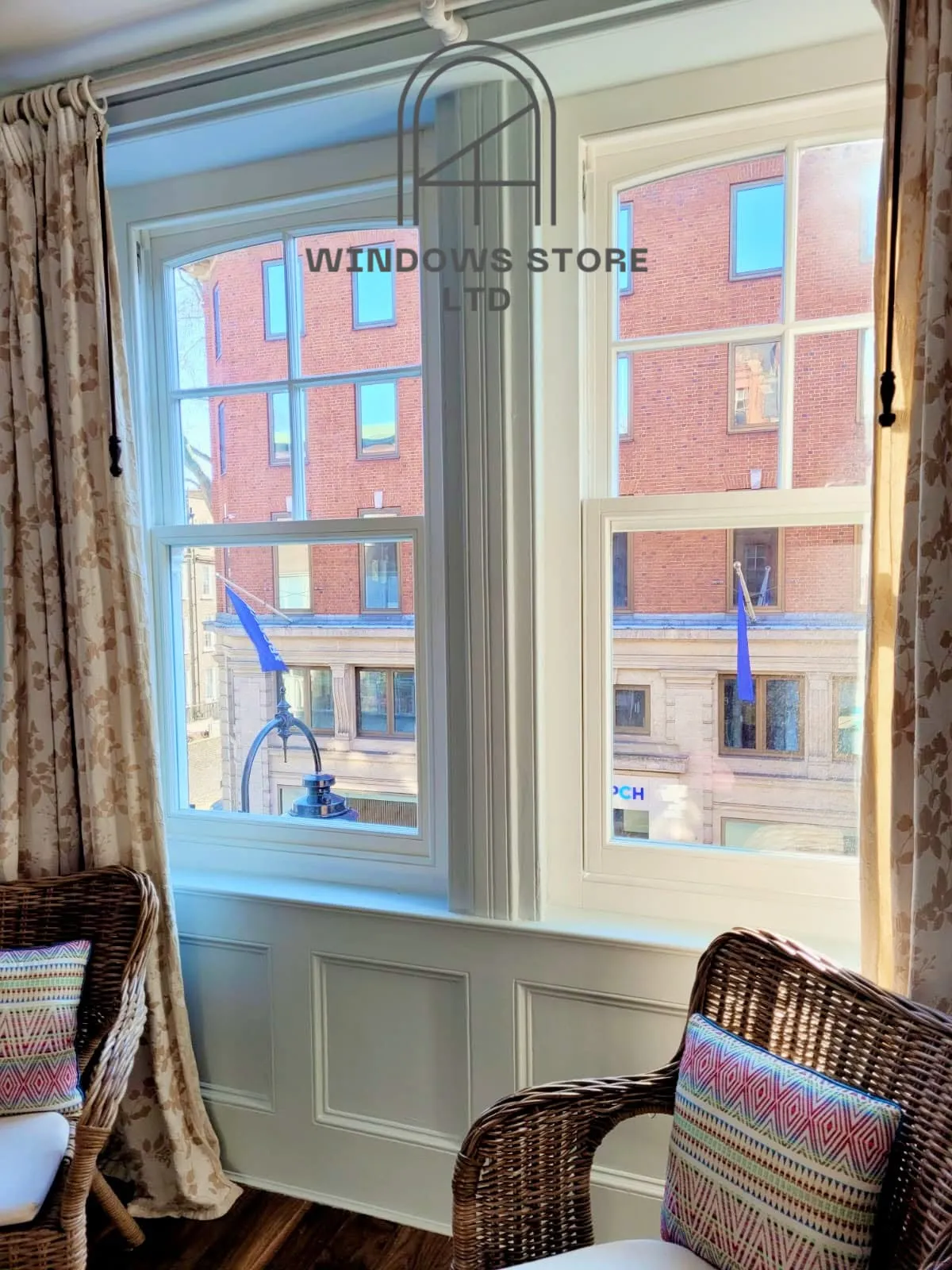
The detail that shows
Genuine linseed oil putty
How we do it
Glass is bedded in linseed oil putty, knifed to a clean bevel and left to skin before painting. It moves with the timber as it expands and contracts, and can be raked out and renewed decades later without disturbing the sash.
The usual shortcut
A timber bead pinned over the glass, or silicone shaped to imitate putty. Both are quicker to fit. Both sit proud of the frame, and the line they leave reads as modern from the pavement.
It is the first detail a conservation officer looks for — and the first one a neighbour notices.
Warmth without the bulk
Glazing to suit the window
We fit a range of glazing packages — double or triple — chosen to suit the window and what it has to do. On a period sash it's kept slim enough to sit within the glazing bar, so the window keeps its proportions.
Where a listed building calls for it, we also make single-glazed sashes. The final decision rests with your conservation officer.
How it works
From first survey to final coat
Survey
We measure every opening, take the profiles off your existing sashes, and check what applies to your property.
Drawings & quote
You see the sections drawn before anything is cut, with a written quote and no obligation.
Made
Built to your measurements in our workshop, putty-glazed and painted before it leaves us.
Fitted
Installed by our own team, never subcontracted. FENSA certificate on completion.
Sash window questions
Before you decide
Can you repair my sashes instead of replacing them?
Often, yes — and where the timber is sound, repair is usually the better option. Rot is frequently limited to the bottom rail or a cill, and those parts can be cut out and replaced without touching the rest of the sash. We'll tell you honestly what yours need.
Can I keep my original box frames?
Where the frames are sound, we can make new sashes to run in them — new cords, weights rebalanced, brush seals added. It keeps more of the original building, and it usually costs less than replacing the whole window.
Will they still rattle and stick?
No. Brush seals set into the frame close the gap that causes the rattle, without stopping the sash from running. Sashes stick when they've been painted shut or the cords have gone — both are things we sort out as part of the work.
Can you match the horns and glazing bar profiles?
That's the starting point. We take the profiles off your existing sashes — horn shape, meeting rail, bar width — and cut the new timber to the same section, rather than fitting a stock profile.
Are your sash windows suitable for listed buildings?
We make single-glazed sashes where a listed building calls for them, and double or triple glazing where it's accepted. What's appropriate varies between boroughs, and the decision rests with your conservation officer.
Do you make sash windows in aluminium?
Yes — as well as the timber box sashes on this page, we make an aluminium box-sash style on our aluminium side, for where you want the slim aluminium frame with a traditional sash pattern.